
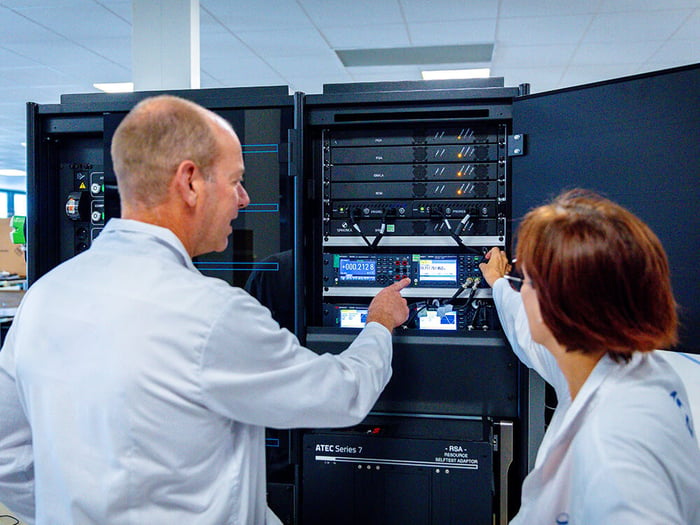


Test Engineering can be compared to a labyrinth if you throw in a ton of obstacles, like the Triwizard Tournament! When designing the test process for any product going to market, all the different paths that can be taken need to be recognized and no stone can be left unturned. Of course, there is no single magic recipe because there is no single product…or industry…or requirement. Things aren’t always as they seem, which is why everyone can relate to the iceberg analogy. It may seem like a shining tiny mass of snow but tell that to the Titanic. As we all know, what’s really happening is beneath the surface and that’s the dangerous part.
This is the reason every field, including test, has experts. In an age where everyone has access to endless information (whether it’s accurate or not), it’s vital to use proven know-how to cover all bases and equally important, avoid assumptions. Everyone knows what happens when you assume so we took 3 popular test engineering misunderstandings and decided to clear the record.
Myth #1 - Product Designers are the Best People to Design the Test Process
Makes sense in theory, who would know the product better than the creator? There is no question that when it comes to the product itself, no one, but it always comes back to one’s expertise. If the product in question is an engine, the designer will know all the ins and outs of how it should run. They will know how fast all the pieces will move and they will know how the final product should perform.
But, will they know what will happen when it is integrated into a system they didn’t design? Are they familiar with compliance rules in different countries? These are just a couple of questions that need to be asked before putting an engine into mass production, with so many more to follow. While this person may be the best engine designer in the world, they may not know what to look for outside the engine itself. If they do know what to look for, are they able to build the test solution they need, and is this the best use of their time? Designing an engine is one expertise, designing a test solution for an engine is another.
Myth #2 - There is Only One Right Way to Test a Product
So not true.
What is true is that there are certain methods and procedures that need to be executed before releasing a product into the world. Take software testing, as an example. You can’t just write some code, try it out and be done with it. There are steps along the way that need to be followed to ensure it is done properly and the result is usable. The way those steps are taken can be varied and tailored to what the ultimate requirements are, as long as they are there.
At the end of the day, tests and test processes are built by people with priorities and preferences so things will not always be the same, and they shouldn’t be. When designing a new product or upgrading an old one, something new is being created; the way to test it will likely need to be created too. What matters most is recognizing what needs to be tested, and the way the product will be used. Question everything, questions are good! Ask things like, can this be automated? What can I do with the data results? Is there a smaller or more modular form factor that can be used? From there, you kick down the door to test options, and it’s a matter of determining the best one for the specific case.
Myth #3 - The Return on Investment (ROI) Will Take Years for Automation to Pay Off
DEFINTELY NOT.
If automated test is on the table (and it usually is) the savings that follow are clear and they’re fast. The most obvious being saving employees’ time by having automated systems perform their tasks. Particularly in the case of defect inspection or any other mundane and repetitive job, it is certain these employees are better spent in other capacities. It is also likely they will prefer to do something else.By replacing this person (or 2 or 3 people) the job is performed more accurately (we all make mistakes…but robots don’t) and faster, increasing production at a lower cost; plus the person can be used for a more productive and profitable task.

When using a good automated system, not only will the likelihood of this problem coming up severely decrease, but if it did, all the data you would need to fix the problem already exists !
By tracking these assets, trends tend to develop and you can profit from them. By monitoring test results and analyzing any shift in manufacturing, it allows factories to schedule preventative maintenance. When things start to change, chances are something is off. By using the results your automated test equipment (ATE) provides, problems can be recognized before they appear. This avoids a scenario where production is forced to shutdown. What’s more expensive than that?
As they say, this is just the tip of the iceberg that is test engineering, which is an art form of its own. When considering product development or a production line or doing anything that puts your brand out there, test is the most important area to make sure you are working with all the facts and leaving the myths behind.
For a consultation with a test engineer, please contact Averna.
Want more ways to beef up your test setup?
Get in touch with our experts or navigate through our resource center.
Read our white paper on how to improve processes and results!


