
Flawless Inspection has a Big Payoff…
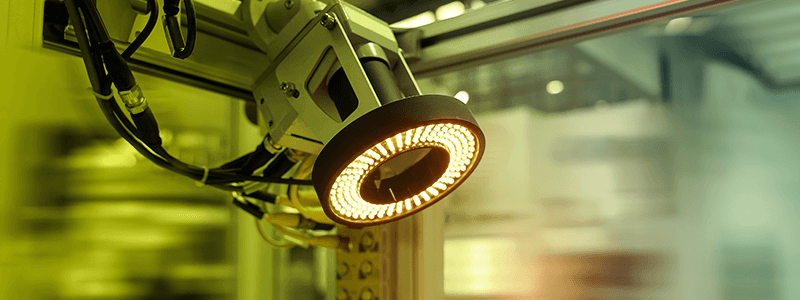
It’s time to put all the cards on the table. There are thousands of companies out there creating life-changing products; would these medical device, automotive and consumer electronics companies still do it without a profit? Doubtful. It certainly would not be scalable to the point of mass manufacturing…people need to eat! So therein lies the daily struggle between compromising on quality or cost. Enter vision inspection. By seeing anomalies and recognizing patterns that cannot be processed by the human eye (or brain) at incomprehensible speeds, you can have it all. Here are 5 ways vision inspection puts cash right back into the system.
1. Accelerate Production Volume
The higher the volume, the higher the income. Building a better product quickly makes this happen. Vision inspection, whether it be defect detection, quality validation, color analysis or any other feature will get a product market-ready quickly. An automated system can work 24/7 without any concern, need be. They work quickly and as long they are monitored and serviced; they are completely reliable.
While that is true in the case of any automated machine, vision inspection doubles down by performing tasks that humans simply can’t do on their own. Some defects may be obvious, but others may be nearly invisible. In these cases, manual inspection requires microscopes and other tools that need to be refocused, one at a time. This can be very long and will slow down the process even further than your standard manual task. It is also crucial and non-negotiable, particularly in the case of MedTech where a single product flaw can cost a life.
2. Improve Product Quality
If a product is poorly manufactured, the cost is going to go a lot higher than what was budgeted. The risk of returns, recalls and reputation means a company could be paying out a lot more than anticipated.
Flawlessness is vision inspection’s middle name. Systems are designed to find, track and trace the tiniest anomaly. If anything is amiss, it will not see the light of day. Additionally, when tasks are performed manually, they are often a victim of subjectivity. One operator may feel that one flaw is acceptable, while another would most certainly fail it. Another common scenario is that an operator is much more motivated at 10 am and a little sleepy after lunch…their judgement is impaired by no fault of their own. Product quality, particularly in high-compliance industries, should never be subject to opinion. By automating visual inspection and comparing the results to uncompromisable requirements, subjectivity is eliminated.
3. Smart Data Management
Your machines are talking to you, but it is a matter of knowing how to listen. When dealing with product manufacturing, the amount of data that is being created is huge. Data is great, but understanding and benefitting from it turns it into profit. A vision system can optimize test data, making it simple to make smarter business decisions, track down bad batches and follow trends.
For example, when there are discrepancies or surprises shown in results, it may be a sign of the production facility itself. Through technologies like machine learning, smart factories can take proactive action like scheduling preventative maintenance to avoid catastrophes.
Another example is dealing with bad batches. By logging all the data as it comes in, finding the root cause in the product itself should be simple enough if it is organized correctly. How much time has been wasted by trying to find the history of a single serial number?
4. Employee Satisfaction
Visual inspection is not for everyone. When forced to do the same task repeatedly, not only does product quality suffer, but morale follows quickly. Many people are not built for mundane tasks, and it shows.
By investing an employee’s salary into a role where they can use their talents and creativity, everybody benefits. People can focus on improving the product itself, instead of wasting their talents. Turnover reduces and replacement costs are minimal. A side benefit of this is that factory training is minimal as well. As long as an operator understands how to work the machine, specialized (and expensive) inspection expertise is not needed anymore.
5. Fast and Flexible Machine Adaptation
Through automation and automated machine vision, production lines become more flexible. Having the ability to switch between different product types or flavors by selecting the right software makes manufacturing simpler and less expensive. Additionally, the more generic the hardware is, the more flexible it becomes. By focusing on a common core platform manufacturing can easily ramp up or ramp down with product demand. Generic equipment minimizes future equipment investments through massive reuse and nominal redesign.
When considering the money that needs to be spent to make a product work, it is important to think long-term. Vision inspection can be a substantial investment upfront, but the return on that investment is apparent very quickly. It is clear that vision sets up a clear path to profit.
Is Your Application Right for Automated Vision Inspection?
More and more companies are turning towards machine vision for its speed, accuracy and repeatability. By using a combination of lighting, cameras, optics, sensors, filters and software, vision inspection can speed up high-volume manufacturing or simplify complex low volume assembly. These systems provide faster and more thorough defect detection as well as many other benefits. Use our solutions flow chart and determine if automated vision inspection is right for you!

To find out more about vision inspection, please contact Averna.
You may also be interested in…

Looking to reuse equipment to maximize your test equipment investment? Here are 3 easy steps to help design an efficient and flexible test platform.
Get in touch with our experts or navigate through our resource center.


