
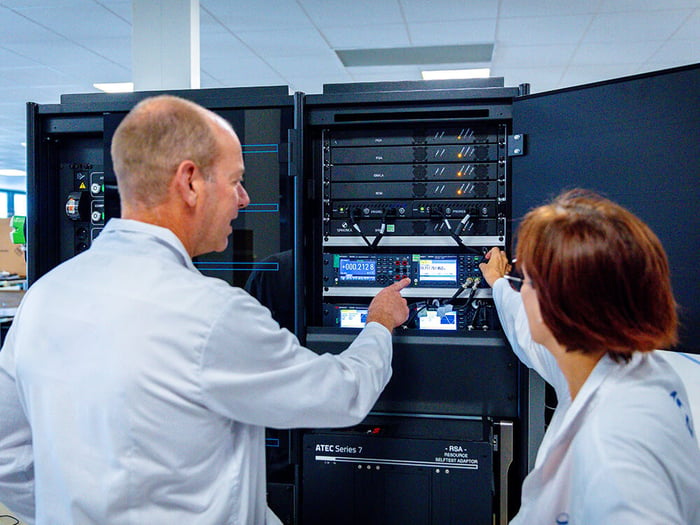

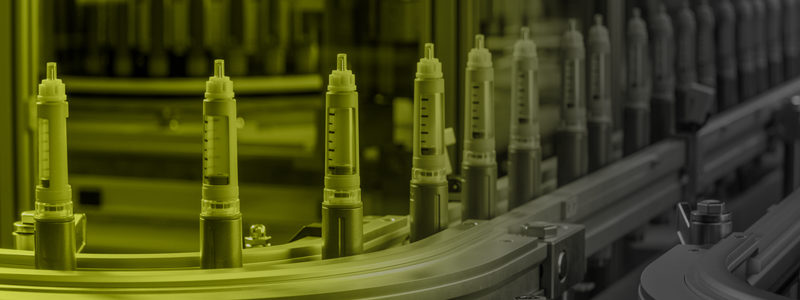
Medical device manufacturing is changing fast. New technologies such as robotics and automation are taking hold on more and more production floors. They deliver consistent results and make scalable production possible for advanced devices like wearables and connected health solutions.
This innovation comes with weighty responsibility. Every sensor and every component must meet strict regulatory standards, because lives depend on it. As demand for medical devices grows and compliance requirements tighten, medical device assembly automation ensures repeatability.
Key Takeaways
- Robotic systems provide exceptional precision. They minimize errors and maintain compliance with ISO 13485 and IEC 60601 standards.
- Automated validation and testing dramatically shorten development timelines and boost efficiency.
- Automation empowers manufacturers with scalable processes and flexible production capabilities.
Why Automation Is Becoming Essential in Medical Device Production
Medical device OEMs face challenges that go beyond compliance. On top of integrating connected technologies, they have to cope with labor shortages while keeping costs under control as production scales. Robotics and automation address these challenges. In practice, medical device manufacturing automation relies on robots guided by machine vision and connected to data systems, so devices can be assembled and inspected with far less manual handling.
The Challenge of Skilled Labor Shortages
Recruiting skilled technicians is harder than ever, and onboarding takes time. Few people have the skills to become productive quickly, and proper training doesn’t happen overnight. Automation can easily take over repetitive tasks such as validation and precision assembly. Robotic systems run 24/7 and deliver consistent results. Engineers can then focus on innovation and make better use of their skills.
To be clear, we are not saying machines should replace people. The point is to automate repetitive actions which robotics can perform much faster and more reliably. Robots don’t get tired (or complain)! Picture a production line where hundreds of compliance checks are completed in hours instead of weeks. That is a huge time saver!
How Automation Is Used in MedTech Manufacturing: Use Cases
Automation is one of the best strategies for better medical device manufacturing, as it optimizes the full ecosystem. Here are a few examples:
Repetitive Validation Tasks
Any change to a device, even a minor one, can send part of the validation process back to square one. With clear documentation, automated systems simplify these updates and make revalidation far less painful. Automation changes the game by performing repetitive tasks, such as pressing buttons or logging data, much faster than a human. Validation cycles shrink from weeks to days, enabling faster product launches without sacrificing quality.
Automated Testing of Complex Devices
Testing advanced medical devices such as implants and diagnostic systems requires absolute consistency. Automated solutions reproduce mechanical stress and environmental variations with precision, cycle after cycle. These systems also verify sensor performance and connectivity, ensuring patient safety and compliance with ISO and IEC standards.
Automated Vision Inspection
A vision system combines cameras, optics, lighting and software to check each part as it is assembled: presence, orientation, dimensions, surface defects, adhesive bead quality, etc. Automating inspection is extremely effective because it avoids the drawbacks of manual inspection, such as inconsistency and/or dependence on operators.
 We applied this approach for a life sciences customer producing receptacles that hold blood samples for testing. The product line came in several variants, so we built a single multi-tasking station leveraging automated vision inspection systems. It dispenses the glue and optically verifies every component of the finished part. Nonconforming units are sorted out or scrapped automatically, which also frees operators from a tedious visual task. (If you’re curious, we’ve written a case study about it!)
Packaging deserves the same diligence. A flawless device in a compromised sterile pouch becomes a nonconforming product. Automating medical packaging inspection applies the same principles to seal integrity on sterile packaging and labeling.
Automated Assembly and Material Handling
In medical manufacturing, robotics transforms assembly lines by handling delicate components with exceptional accuracy. Automated handling reduces contamination and maintains cleanroom compliance for critical devices. For many of these tasks, SCARA robots are a natural fit. They are fast and compact, and they excel at the vertical insertions and placements that small medical components require.
Benefits of Automated Medical Device Manufacturing
Automation transforms the entire manufacturing ecosystem. Here are the main benefits:
- Enhanced Quality Assurance
- Automated vision systems identify microscopic defects and maintain strict IEC and ASTM compliance.
- Lower Operational Costs and Higher ROI
- Robotics cut labor expenses and reduce material waste which protects profitability, despite rising compliance demands.
- Agile Production Capabilities
- Robots easily adjust to design changes and customization needs without costly retooling.
- Accelerated Market Entry
- Automation slashes validation timelines and accelerates assembly for a strong competitive advantage.
- Less Paper on the Shop Floor
- A robotic cell already knows which part it placed, with which parameters, and whether the unit passed inspection. Sending that data straight to an electronic device history record (eDHR) replaces paper trails and hand-signed test sheets.
- The same data also feeds predictive maintenance.
- Process Standardization
- Modular and reusable systems streamline training, speed up new product launches, and minimize total cost of ownership.
Why Choose Custom-Built Robotics for Assembly Lines?
What are the benefits of custom-built robotics for medical device assembly lines? It all starts with the product itself. An injector and a catheter share neither the same geometry, the same tolerances, nor the same weak points. Standard automated assembly equipment requires you to adapt the process to the machine, whereas a custom system does the opposite.
For example, a cell designed for a specific device can combine assembly, inspection and testing on a single station, like the one described above. Fewer transfers between machines means fewer handling steps and fewer points where an error can creep in.
Another consideration is Design for Testability and validation. When qualification requirements are factored in from the design stage, the documentation is built along with the machine.
Then comes the question of price! It’s often assumed that a standard system is always cheaper, but the real calculation is about total cost of ownership, which weighs labor savings and yield over the product’s lifetime. Standard equipment still makes perfect sense for high-volume repetitive tasks. Many manufacturers actually choose a hybrid path: standardized machine modules complemented by custom-designed process stations.
Onshoring Through Robotics: Bringing Production Closer
Global supply chain volatility and complex regulations make offshore production risky. Robotics enables local manufacturing with consistent quality and faster delivery. It reduces dependence on low-cost labor and supports high-precision production closer to end markets. It is also a selling point and an extra layer of security, as local manufacturing is increasingly in demand. Because automation standardizes processes and reduces manual work, producing close to end markets becomes viable even where labor costs more.
What to Consider When Integrating Robotics and Automation in Medical Device Production?
We are used to designing automated test and assembly solutions that make medical device manufacturing easier, so we’ll take the liberty of sharing a few pieces of advice.
Product Design for Automation
A device designed for manual assembly doesn’t always automate well. Symmetrical parts that are hard to orient, or clips that require the sensitivity of a human hand, make the robot’s job harder. In the medical field, these considerations must happen early, because every late design change restarts part of the regulatory process (not to mention increases cost).
Equipment Qualification
A robot that handles the product is production equipment in its own right. It goes through commissioning, qualification and validation (IQ, OQ, PQ) before producing a single sellable unit. In the United States, the medical validation process falls under 21 CFR Part 820. Since February 2, 2026, the QMSR has incorporated ISO 13485:2016 by reference.
Data and Electronic Records
Automating the line doesn’t make the shop floor paperless if the cell still prints a ticket that someone has to sign. To replace paper, electronic records and signatures must comply with 21 CFR Part 11 in the United States. This must be scoped from the requirements stage: which data the station captures and who signs off on it. Where that data lands, whether an MES or an eDHR, should be decided at the same time.
Cleanroom Environment
If assembly takes place in a cleanroom, the cell must meet the cleanliness class of the area: materials, lubrication, particle generation, ease of cleaning. This choice also weighs on the budget, since cleanroom-compatible components cost more.
Volume and Return on Investment
Before putting a price on an automation project, a few simple questions help guide the decision. Are the processes repetitive and well-defined? Is the product design stable, or still moving? What does current labor really cost? How many variants will the line need to absorb over the product’s lifetime? If the answer to the first question is no, that’s an eye-opener. You don’t automate a process that changes every two months.
Ready to Automate Your MedTech Production?
Averna Powered by Spherea helps manufacturers meet evolving standards and deliver reliable products at scale thanks to automated test systems and robotic integration services. Facing compliance challenges? Speak with Averna’s test engineering and automation experts to find solutions tailored to your production needs. Contact us today and start building a smarter, more efficient manufacturing strategy.
You may also be interested in…
Looking for ways to guarantee compliance and quality? Discover our Life Sciences Testing Solutions and see how Averna ensures reliable medical equipment for global standards.

You may also be interested in…
Looking for ways to guarantee compliance and quality? Discover our Life Sciences Testing Solutions and see how Averna ensures reliable medical equipment for global standards.


