
Key Takeaways
► Automation has become the foundation of modern medical device manufacturing. It meets the growing demand, ensures compliance with strict regulations, and accelerates production timelines.► Robotic systems provide exceptional precision, speed up production, and guarantee consistent results. They minimize errors and maintain compliance with ISO 13485 and IEC 60601 standards.
► Automated testing dramatically shortens development timelines and boosts efficiency.
► Automation empowers manufacturers with scalable processes and flexible production capabilities.
► End-to-end digital traceability reinforces regulatory compliance and audit readiness.
Medical device manufacturing is undergoing rapid transformation. Precision, speed, and connectivity define this new era. Automation ensures consistent results and enables scalable production for advanced devices like wearables and smart health solutions.
This innovation demands serious responsibility. Every sensor, component and final device must meet strict regulatory standards because lives depend on it. As the demand for medical devices rises and compliance requirements tighten, automation ensures quality and scalability. It protects patients while helping manufacturers keep pace with global healthcare needs.
Why Automation Is becoming Essential in Medical Device Production
Medical device OEMs face challenges that extend beyond compliance. They need to integrate connected technologies, address labor shortages, and manage costs while scaling production efficiently. Assembly and test automation address these issues by improving precision, increasing throughput, and enabling advanced manufacturing strategies.
The Challenge of Skilled Labor Shortages
Recruiting and onboarding skilled technicians is time-consuming and costly, with a lot of competition looking for the same resources. Highly automated production processes help overcome this challenge by reducing manual intervention, enabling faster onboarding, and ensuring consistent workflows across multiple lines and sites.
Commissioning validates these conditions under real-world scenarios. It ensures the facility can handle rapid changes without compromise.
Automation easily handles repetitive tasks such as quality inspection and precision assembly. Automated systems operate 24/7, increasing throughput while , and delivering consistent results. Many companies struggle to scale up automation because of the ongoing effort and number of experienced resources it takes not only to develop the system but to validate, replicate, maintain and support them. Knowing how and when to outsource can remove a lot of that burden, offering a scalable approach without defocusing key resources from core activities.
The Demand for Precision, Speed, and Consistency
Medical device testing must comply with standards such as ISO 13485 and IEC 60601. In today’s connected healthcare landscape, precision and security are non-negotiable for sustainable success.
Manual processes often introduce variability that threatens compliance and delays production. Automation can eliminate these risks. It ensures repeatable accuracy at every stage and maintains secure digital audit trails.
Automation enhances cybersecurity in medical manufacturing. Data privacy is crucial for many reasons in healthcare, both to prevent personal data leaks and to avoid tampering with the device itself. Should any privacy risks come to fruition, the trust that has been built behind any brand name would clearly be in doubt, and more importantly, will potentially hurt somebody.
How Automation Is Used in MedTech Manufacturing: Use Cases
Automation optimizes every aspect of medical device manufacturing. Here are some examples:
Repetitive Validation Tasks
Automated systems complete hundreds of checks in hours and, when paired with comprehensive documentation, streamline updates to reduce revalidation headaches. Compliance depends on thorough validation, but traditional approaches take too long. Automation accelerates this by performing repetitive tasks such as button pressing and data logging far faster than humans. Validation cycles become a lot more efficient while engineers and technicians can focus on other tasks.
Automated Testing of Complex Devices
Testing complex medical devices such as implants and diagnostic systems is never routine. It is a critical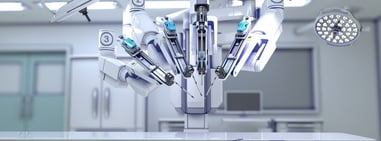 safeguard against failures in situations where patient safety is at stake. These devices must endure stress, temperature changes, and repeated use while complying with strict regulatory standards. Manual testing often introduces variability and slows production down. Automated inspection systems provide a solution by delivering precise and repeatable tests under controlled conditions. They ensure every unit meets rigorous quality benchmarks, reduce human error, and accelerate throughput. Automation turns testing from a bottleneck into a strategic advantage without compromising compliance or safety.
Automated Assembly and Material Handling
In medical device manufacturing, robotic systems enable micron-level positioning and force control essential for assembling components such as implant housings and diagnostic sensor arrays. Integrated vision and feedback loops maintain alignment tolerances within regulatory specifications, even under cleanroom constraints. Automated material handling minimizes particulate generation and ensures traceability by linking each movement to validated process parameters. These systems support continuous operation with predictive maintenance protocols, reducing variability and ensuring compliance with ISO 14644 and GMP requirements.
Benefits of Robotics in Medical Device Production
Automation does more than increase speed. It transforms the entire manufacturing ecosystem. Here are the main benefits:
Improved quality control
These systems using automated vision inspection replace manual inspections, reduce variability, improve inspection coverage and maintain strict IEC and ASTM compliance.
Cost efficiency
Automation cuts labor expenses, reduces material waste, and sustains profitability despite rising compliance demands.
Enhanced flexibility
Automation enables easy adjustments to design changes and customization needs without costly retooling.
Increased production capacity
Automated systems operate continuously to increase throughput and/or keep pace with spikes in global demand. As we have seen, when there is an urgent healthcare crisis, manufacturers need to move fast.
Faster time to market
Automation slashes test and inspection timelines and speeds up assembly for a strong competitive advantage.
Traceability improvements
Automated systems log every step for traceability and leverage analytics for preventive maintenance or to optimize performance.
Onshoring Through Robotics: Bringing Production Closer
Global supply chain volatility and complex regulations make offshore production risky. Automation enables local manufacturing with consistent quality and faster delivery. They reduce dependency on low-cost labor and support high precision production closer to end markets.
Why Automation Enables Localized Manufacturing
Automation makes localized manufacturing practical by solving key challenges. It reduces manual work and standardizes processes. This simplifies documentation and makes audits more reliable. It also improves communication between design and production teams and ensures compliance with local regulations. These capabilities ensure consistent quality and streamline compliance. As a result, manufacturers can achieve precise production close to end markets and make localized manufacturing viable even in regions with higher labor costs.
Ready to Automate Your MedTech Production?
Automation is more than a tool for efficiency. It strengthens resilience, ensures compliance with evolving standards, and enables innovation for next-generation medical devices including portable and connected solutions. From automated test systems to integration services, Averna helps manufacturers meet evolving standards and deliver reliable products at scale.
Facing compliance, cost, or security challenges? Speak with Averna’s test engineering and automation experts to find solutions tailored to your production needs. Contact us today and start building a smarter, more efficient manufacturing strategy.
FAQ
You may also be interested in…

Looking for ways to guarantee compliance and quality? Discover our Life Sciences Testing Solutions and see how Averna ensures reliable medical equipment for global standards.
Get in touch with our experts or navigate through our resource center.


