

Key Takeaways: What You’ll Learn About EVSE
► EVSE (Electric Vehicle Supply Equipment) is the system that delivers electricity from the grid to your EV’s battery—safely and efficiently.► EVSE vs. Chargers: EVSE manages power delivery and communication, while the actual charger may be inside the vehicle (AC) or in the station (DC).
► Core Components include enclosures, connectors, and internal electronics that ensure safe, reliable charging.
► Top Manufacturers like Tesla, ChargePoint, and EVBox shape the global EVSE landscape with diverse hardware and networks.
► Future Trends include smart charging, vehicle-to-grid (V2G) tech, and the expansion of fast-charging corridors.
When you think about electrification, EVs often get all the attention but there’s a key piece of technology working quietly in the background: Electric Vehicle Supply Equipment, or EVSE.
Whether you're charging your EV at home, at work, or on the road, EVSE is what makes it all happen. It’s the behind-the-scenes infrastructure powering the shift to electric mobility. In this blog we’ll break down what EVSE is, how it works, why it matters, and why it is a key player in shaping a cleaner, smarter future for transportation wherever you are in the world.
EVSE: Meaning
Let’s start with the basics. EVSE stands for Electric Vehicle Supply Equipment. It’s the system that delivers electricity from the grid to your EV’s battery. That includes the physical hardware, the software that controls it, and the safety features that keep everything running smoothly and safely.
What is the difference between EVSE and a charger?
People often use the terms “EVSE” and “charger” as if they mean the same thing, but that’s not always true. For everyday charging at home or work (AC charging), the actual charger is built into the vehicle, while the EVSE is the external device—the cable or wall unit—that safely delivers power and helps the vehicle communicate with the grid. But when it comes to DC fast charging, like at highway stations, the charger is located in the station itself and sends power directly to the vehicle’s battery, which allows for much quicker charging.
How EVSE protects drivers and vehicles
Safety first! EVSE is a vigilant guardian. It constantly checks voltage, current, and temperature. If something goes wrong—like a power surge or overheating—it shuts off power instantly. It also makes sure charging only starts when everything is securely connected, protecting both the vehicle and the user. This is especially important in public spaces, where lots of people use the same equipment. No sparks, no surprises!
Components of an EVSE Unit
Enclosure and mounting types
EVSE units can be mounted on walls or pedestals, and they’re built to handle tough environments. Rain, snow, sun, or the occasional bump from a shopping cart—they’re made to handle it all.
Cables and connectors
The type of cable and connector depends on the region and the EV model. Common connector types include CCS Type 1 and Type 2, NACS and CHAdeMO, each designed to match different charging standards.
Internal electronics and protection systems
Inside the EVSE, you'll find relays, sensors, circuit boards, sensors, and safety switches. These EVSE components manage power flow and keep communication with the vehicle smooth and secure.
How EVSE Works
Communication with the vehicle
When you plug in, your EV and the EVSE start chatting. They figure out how fast to charge, how full the battery is, and whether it’s safe to begin. Protocols like ISO 15118 enable features like plug-and-charge and smart energy management.
Power conversion and delivery
AC chargers deliver alternating current to the vehicle, where the onboard charger acts as the middleman, converting it into direct current (DC) to charge the battery. DC fast chargers skip the middleman by converting AC to DC inside the charging station and sending that DC power straight to the battery making charging much faster.
Safety shutoff mechanisms
If anything goes wrong such as overheating, a power spike, or a disconnected cable, the EVSE cuts the power instantly. It’s like having a built-in emergency brake for electricity.
Major EVSE Manufacturers and Networks
Tesla Supercharger and NACS adoption
Tesla’s Supercharger network is known for being fast and reliable. With more automakers adopting the North American Charging Standard (NACS), Tesla’s connector is becoming a de facto standard in North America.
ChargePoint’s hardware and network
ChargePoint offers a wide range of AC and DC chargers, backed by a robust software platform for managing fleets, billing, and energy use.
EVBox’s global offering
EVBox provides scalable charging solutions for homes, businesses, and cities. It has a strong presence in Europe and is expanding globally.
Other players: Wallbox, Blink, EVgo, Tritium
These companies are expanding fast-charging networks, developing smart home chargers, and helping drive the global shift to electric mobility.
Standards and Connector Trends
North American Charging Standard (NACS)
Originally developed by Tesla, NACS is now being adopted by other automakers and charging networks in North America. It promises better compatibility and a more seamless charging experience.
CCS, CHAdeMO, and Global Formats
CCS (Combined Charging System) is widely used in Europe and North America, while CHAdeMO remains popular in Japan. Although the world is moving toward more unified standards, regional differences still exist for now.
Future Trends in EVSE Infrastructure
Smart charging and grid integration
Smart EVSE can adjust charging based on grid demand, electricity prices, or renewable energy availability. It’s like giving your charger a brain and a conscience.
Bi-directional charging (V2G)
Bi-directional charging technology allows EVs to send power back to the grid 🔁. That means your car could help power your home—or even your neighborhood—during peak demand. Canadian company dcbel is an excellent example of this technology.
Expansion of highway fast-charging
Governments and companies are investing in high-speed charging corridors along major highways. These networks are key to making long-distance EV travel more practical and stress-free.
EVSE Testing: Where Performance is Proven and Standards are Enforced
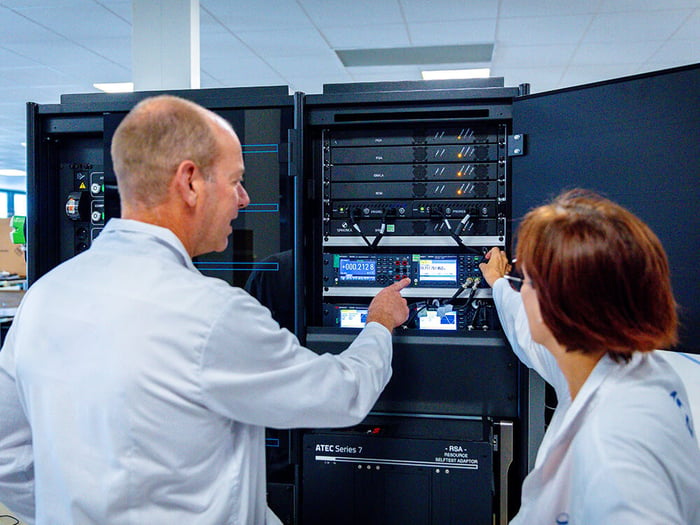
Before EVSE systems hit the market, they go through rigorous testing to ensure they are safe, reliable, and ready for real world use—from tropical summers to freezing winters. Automated test equipment is required considering the safety risks to the operators.
EVSE Testing focuses on:
- Electrical safety and fire protection
- Electronics testing
- Compatibility with different EV models and networks
- Cybersecurity, especially for connected and cloud-based systems
- Communication protocol validation (e.g., ISO 15118, DIN 70121, IEC 61851-1)
- Battery simulation to replicate real-world charging behavior
- AC/DC regenerative load handling and fault injection
- Microgrid and V2G scenario testing under high-power conditions
Curious How Your EVSE Holds Up Under Real-World Pressure?
Ensure your charging solution meets safety and interoperability standards—without slowing your time to market.
→ Speak with our EVSE testing team!
You may also be interested in…

Want to boost EVSE performance? Watch “Rethink Electrification” to discover 4 critical steps for smarter, more reliable charging solutions!
Get in touch with our experts or navigate through our resource center.


