
At first glance, a feasibility study may look like an added cost. In practice, it often prevents far greater expenses by revealing early whether the initial concept is achievable, stable, and worth developing further.
To better understand how efficiency & accuracy will improve through better test equipment, a feasibility study is a simple solution. This is an opportunity for your team to take a step back and work with experts in the field to get a complete overview of the ideal test set-up for your product and find the most cost-effective strategy to execute.
Key takeaways
- A feasibility study verifies whether a test concept can meet accuracy, repeatability, cycle time, and robustness requirements under realistic operating conditions before major investment.
- It lowers technical and financial risk by validating high‑risk assumptions early through targeted prototyping using representative setups and operating conditions.
- The results establish a measurable basis for specifications, test architecture choices, and an informed decision on the next development step.
What is a Feasibility Study? Definition & Meaning
A feasibility study is an early-stage assessment used to determine whether a project or proposed solution is credible and worth pursuing. Its purpose is to identify and reduce uncertainty before development moves further. By examining technical constraints, expected performance, operational conditions, and project risks, it helps teams decide whether the concept should be refined, tested further, or reconsidered.
In a test engineering context, a feasibility study is often used to confirm whether a test method or automated solution can realistically support the intended application. Rather than relying on intuition, teams use a feasibility study to confirm whether the approach is aligned with real production constraints.
A strong feasibility study helps answer questions such as:
- Can the required accuracy, repeatability, and cycle time actually be achieved?
- Can the solution handle product variations, for example, between batches?
- How do sensors, interference, or environmental conditions affect performance?
- Can the process be automated reliably, or is manual testing still more realistic?
- What are the technical limits, cost drivers, and integration risks?
- Is the expected outcome good enough to outperform or support current human inspection methods?
How long does a feasibility study take?
The duration of a feasibility study varies with the level of uncertainty and the need for hands-on validation.
For straightforward concepts or technologies that are already well understood, the work can be completed within a few days or a couple of weeks. In these situations, teams rely on existing knowledge, previous test setups, or known methods.
When the study involves new measurement approaches, automation challenges, custom designed technologies, or strict performance targets, it usually takes longer. Time is then spent building prototypes, running experiments, and refining the approach based on real data.
If a feasibility study is completed too quickly, it often means that important risks were not fully explored.
Why is a Feasibility Study Important in Testing?
A feasibility study is important in testing because it helps companies challenge assumptions before they invest in a solution that looks promising but may not perform as expected. Testing is full of ideas that seem right in theory. Oftentimes it is believed equipment should behave a certain way, but we have learned that believing will only get one so far. Just because something should, does not mean it will. Or can.
This is especially important when the test solution depends on multiple subsystems working together. Sensors, mechanical alignment, a mix of sensor technologies, timing, data acquisition, environmental conditions, and automation logic can all affect the reliability of the result. A concept that appears valid in isolation may become far less robust once these constraints are introduced.
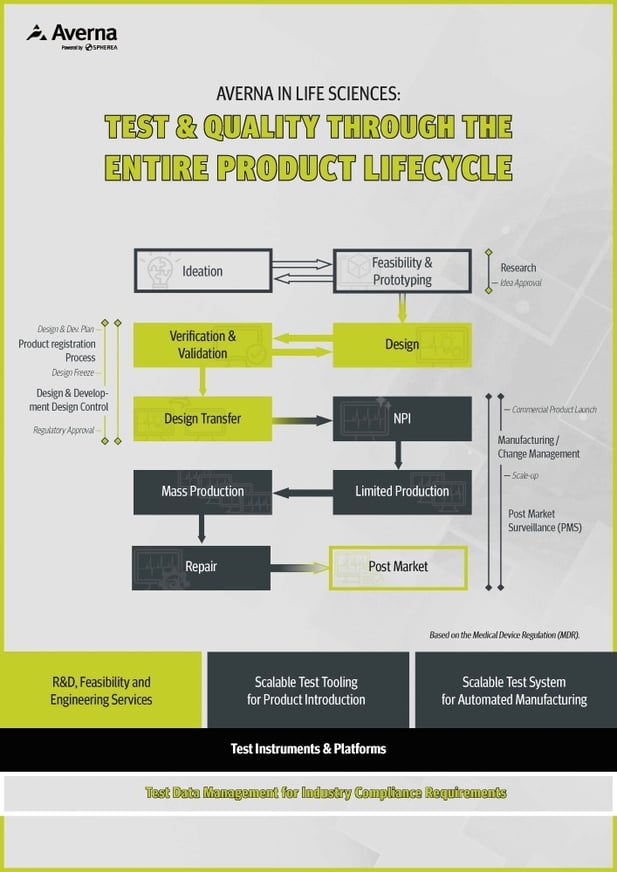
In practice, feasibility studies and prototyping are carried out during the research and ideation phase. Only once these analyses are completed and documented do we move into the design, verification and validation stage. This allows for full control over risks and expectations.
What are the Steps in Conducting a Feasibility Study?
A feasibility study can take different forms depending on the field, but in test engineering, the process starts with the right questions. Because each product and system comes with its own constraints, there is no universal checklist. What matters is identifying what must be proven before design begins.
The secret sauce to a strong feasibility study has a few key ingredients:
1. Define the technical question
Start by identifying what needs to be proven. This may involve accuracy, repeatability, cycle time, safety, or integration constraints. At this stage, the objective is to frame the study around a clear engineering question rather than a general idea. A feasibility study is much more useful when the expected outcome is specific and measurable.
That also means understanding what the product is expected to do in real life. The technical questions should reflect the actual application, not only the test concept itself. For example, will the product be exposed to temperature swings, humidity, mechanical shock, or repeated handling? Is it expected to operate for years in the field, or only for a short lifecycle? Could a small defect reduce performance, shorten product life, or create a safety concern?
These questions help define what truly needs to be tested, inspected, or controlled. They also help determine whether the feasibility study should focus on measurement performance, environmental robustness, defect detection, automation strategy, or a combination of these factors.
2. Identify the highest-risk assumptions
Focus on the points the project relies on but has not yet validated. These are often the main source of technical risk. Some assumptions look reasonable at the beginning yet become major blockers once testing begins. Identifying them early helps teams focus their effort where uncertainty is highest.
At this stage, teams may also challenge broader test strategy assumptions. For example, does the application truly require automation, or could manual testing satisfy the need? Should the solution be inline or standalone? Is the proposed method realistic for the expected production environment? Can the right accuracies and repeatability be achieved? These questions help expose risks that are often underestimated at the start of a project.
3. Build a focused proof of concept
Create a reduced setup with the right instrumentation and just enough software to answer the question. This proof of concept is not meant to replicate the final system. It is designed to validate a targeted assumption, generate useful data, and show whether the proposed approach deserves further development.
This is also where the test concept starts to take shape. The team may explore what kind of platform is needed, how much instrumentation is required, and whether the proposed setup can realistically support the product. In some cases, the proof of concept also helps reveal whether the future system must be compact, flexible, or adapted to specific manufacturing constraints.
4. Test under representative conditions
Use realistic parts, signals, and operating constraints so the results reflect the real application. If the setup is too far removed from actual conditions, the conclusions may be misleading. The closer the test is to reality, the more valuable the feasibility study becomes.
This step also helps determine under which conditions the proposed method remains reliable. Environmental influences, handling conditions, part variation, and operating limits can all affect test stability. A method that performs well on a clean bench may behave very differently once more realistic constraints are introduced.
5. Evaluate the results
Compare the data against clear success criteria. Look at margins, repeatability, accuracy, and technical limitations. Depending on the application, this may include:
- Measurement accuracy compared to target specifications
- Repeatability across multiple runs, operators, or DUT samples
- Detection capability for known defects or edge cases
- Signal stability and noise sensitivity under test conditions
- Cycle time versus production requirements
- Ability to distinguish conforming units from defective ones
- Sensitivity to part-to-part variation or positioning tolerance
At this stage, the goal is to define realistic performance limits and set credible targets for the next phase.
6. Decide what comes next
Use the findings to confirm the path forward, refine the concept, or reconsider the approach. In some cases, the study supports a move into design. In others, it shows that further prototyping, additional testing, or a different technical direction is needed first.
This step is often strongest when the feasibility study is connected to a specification phase. Once achievable performance is understood, system requirements can be built around proven results instead of assumptions.
Example of a Feasibility Study in a Test Automation Project
Consider a medical device manufacturer that wants to automate the visual inspection of sealed trays at the end of the production line. The goal is to detect seal defects, contamination, and packaging variation without slowing throughput or increasing false rejects.
A feasibility study begins by identifying the main technical risks.
- Can the vision system detect the required defect size with enough repeatability?
- Will the optics, lighting, and camera resolution support the inspection criteria?
- Can the system remain stable across part variation, material differences, and line conditions?
- Can image acquisition, analysis, and pass/fail decisions fit within the required cycle time?
- Can the part be placed repeatable in front of the vision system?
To answer these questions, the team builds a focused proof of concept using representative hardware and software. This may include an industrial camera, a telecentric lens or application-specific optics, controlled illumination, a motion fixture or conveyor section, and a PXI-based or industrial PC platform for image acquisition and control. The software layer may include machine vision tools for edge detection, contrast analysis, blob analysis, seal inspection, and defect classification, along with basic sequencing in LabVIEW, TestStand, MVTEC Halcon, or Python.
Testing is then performed on real samples under representative conditions. Good units and known defective units are inspected to evaluate image quality, measurement sensitivity, defect detectability, false failure risk, and system stability over repeated cycles. The study may also assess trigger timing, part positioning tolerance, barcode association, and traceability requirements if inspection results must be linked to batch or unit-level data.
The results show if the concept is ready for full system design or if the original automation approach should be reconsidered before larger investment is made.
Feasibility Study Consulting Services with Averna
Did we take the example above because this is the kind of feasibility studies, we love doing? Yes. Over the years, Averna has participated in countless feasibility studies, and has already faced the bumps in the road so you don’t have to. Working together, all bases are covered, reducing your risk exponentially.
Averna will sit down with your team to determine where it is you need to go and how to get there. By collecting your requirements, samples and experience, we can tell you upfront what results will be attainable, how to get you there and ensure you avoid the wrong path. At the end of a feasibility study, you will walk away with a roadmap to the most optimized test setup for your business. This includes having the option to continue with Averna or shop around.
To find out more about feasibility studies and how to apply one to your current test project, please contact Averna.

You may also be interested in…
By hiring Averna to perform a feasibility study, an innovative vision solution was developed to solve one customer’s major inspection challenges. Read this case study to see the results!
Get in touch with our experts or navigate through our resource center.


